Commercial Roofing in Torrance, CA
Commercial roofing requires attention to membranes, drainage, penetrations, access and the operational needs of the property.
Commercial Roof Areas That Deserve Attention
Membrane condition
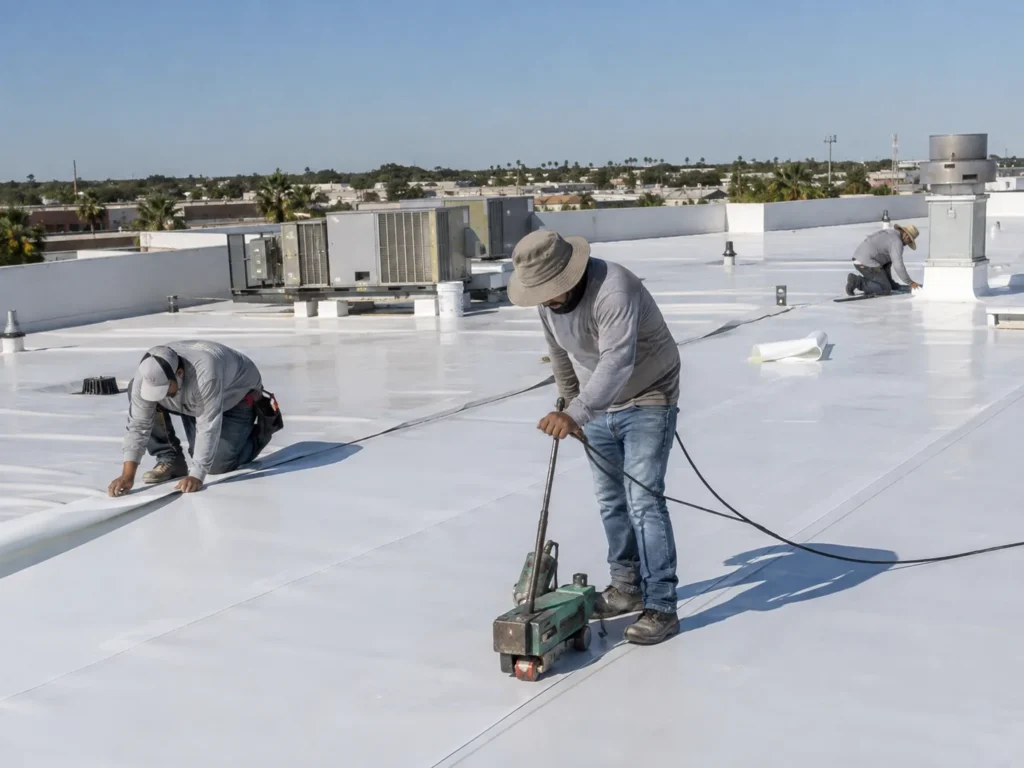
TPO, modified-bitumen and other low-slope systems depend on intact surfaces and seams.
Drains and water flow
Ponding or blocked drainage can increase stress on commercial roof systems and should be investigated.
Rooftop equipment and penetrations
HVAC curbs, pipes and other equipment create transitions where flashing and seals matter.
Previous repairs
Patch history can help identify recurring problem zones and whether a localized repair remains practical.
Commercial Leak Diagnosis and Repair Planning
Commercial leaks can disrupt tenants, inventory and daily operations. Evaluation should trace the likely water path, identify affected roof components and define access and work areas so the proposed scope is understandable.
Maintenance, Repair or Replacement
Localized membrane or flashing problems may support repair. Repeated failures, widespread deterioration or an aging system in poor condition can justify replacement planning. The decision should reflect roof condition and operational needs rather than a generic age rule.
Roof Repair Roof Inspection Roof Replacement Commercial Roof Repair Commercial Roof Replacement
Commercial Roofing Services in Torrance
For leaks, open seams, failed flashing and drainage problems, see commercial roof repair in Torrance. When a roof has widespread membrane deterioration or recurring leaks, see commercial roof replacement in Torrance. Both start with an evaluation of the actual roof condition.
Commercial Roof Types We Work With
- TPO single-ply membrane
- Modified bitumen
- Built-up roofing (BUR)
- Roof coatings over sound existing roofs
- Low-slope roofs on multifamily and mixed-use buildings
Commercial Roofing FAQs
What types of commercial buildings do you serve?
Warehouses, retail and office buildings, multifamily properties and mixed-use buildings across Torrance.
How often should a commercial roof be inspected?
At least once a year, before the rainy season, and after other trades such as HVAC technicians have worked on the roof.
Can work be scheduled around business hours?
Work areas, noise and access can often be planned around tenants and operating hours.
What causes most commercial roof leaks?
Seams, flashing at walls and parapets, HVAC curbs, penetrations and blocked drains are the most common sources.
Ready to Discuss Your Roof?
Tell us what you are seeing and start with the roofing service that fits the condition of your property.
Commercial Roofing Requires Clear Scope
Commercial and multifamily roofs often include flat or low-slope areas where membrane condition, seams, penetrations, flashing and drainage deserve careful attention. A leak symptom should be traced before the repair area is defined.
Repair and Maintenance Decisions
An isolated defect may support targeted repair when surrounding material remains serviceable. Recurring leaks, widespread membrane deterioration or broader drainage problems can require a larger repair area or replacement planning.
What to Compare in a Commercial Roofing Proposal
Compare the exact roof area, materials, flashing and penetration work, removal and disposal, treatment of underlying deterioration and any permit responsibilities that apply. The lowest total does not necessarily represent the same scope.
See flat roof repair, roof inspection and our estimate comparison guide.