Roof Inspection in Torrance, CA
Understand visible roof condition, likely problem areas and the information needed to compare repair with replacement before approving a larger scope.
What a Roofing Inspection Should Look At
Roof covering condition
Check visible shingles, tiles or membrane areas for damage, movement and deterioration.
Flashing and transitions
Roof edges, walls, valleys, penetrations and other transitions deserve specific attention when leaks are suspected.
Drainage
Gutters, valleys, drains and low-slope areas can reveal debris buildup, ponding or water-flow concerns.
Interior clues
Ceiling stains and moisture locations help guide leak tracing but do not always identify the exact exterior entry point.
When an Inspection Is Useful
An inspection is useful after a new leak appears, before comparing repair and replacement, when recurring problems need context, or before seasonal rain when a property owner wants to understand visible roof condition.
What an Inspection Cannot Always Reveal
Some decking, underlayment and concealed conditions are hidden beneath roofing materials. An inspection can document visible conditions and likely problem areas, but concealed damage may only become known after approved work opens the roof assembly.
What to Compare Before Work Begins
Compare the proposed scope, materials and components included, how additional concealed conditions will be handled, permit responsibilities when applicable, cleanup and workmanship coverage. The lowest number is not automatically the same scope.
Ready to Discuss Your Roof?
Tell us what you are seeing and start with the roofing service that fits the condition of your property.
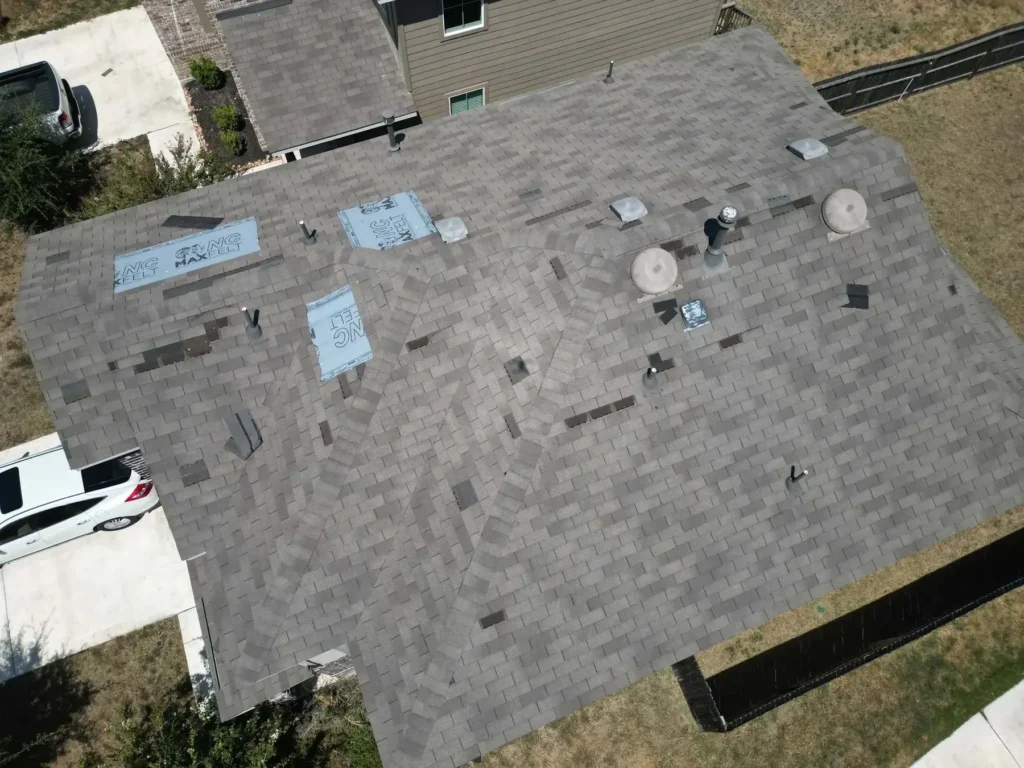
What a Roof Inspection Can Help Clarify
An inspection can help connect visible symptoms with the roofing areas most likely to require attention. Depending on the roof and the concern, this may include roofing material, flashing, penetrations, valleys, drainage, transitions and visible signs of underlying deterioration.
Inspection Before Repair or Replacement
A ceiling stain, missing material or an older roof does not by itself determine the correct scope. Inspection findings can help separate an isolated repair from a broader condition and provide better context for a repair-versus-replacement decision.
Useful Questions After an Inspection
Ask what area appears affected, what evidence supports the proposed scope, whether underlying components could change the work and what is included in the estimate. Clear findings make competing proposals easier to compare.
Next, review roof repair, roof replacement or our guide to comparing roofing estimates.